
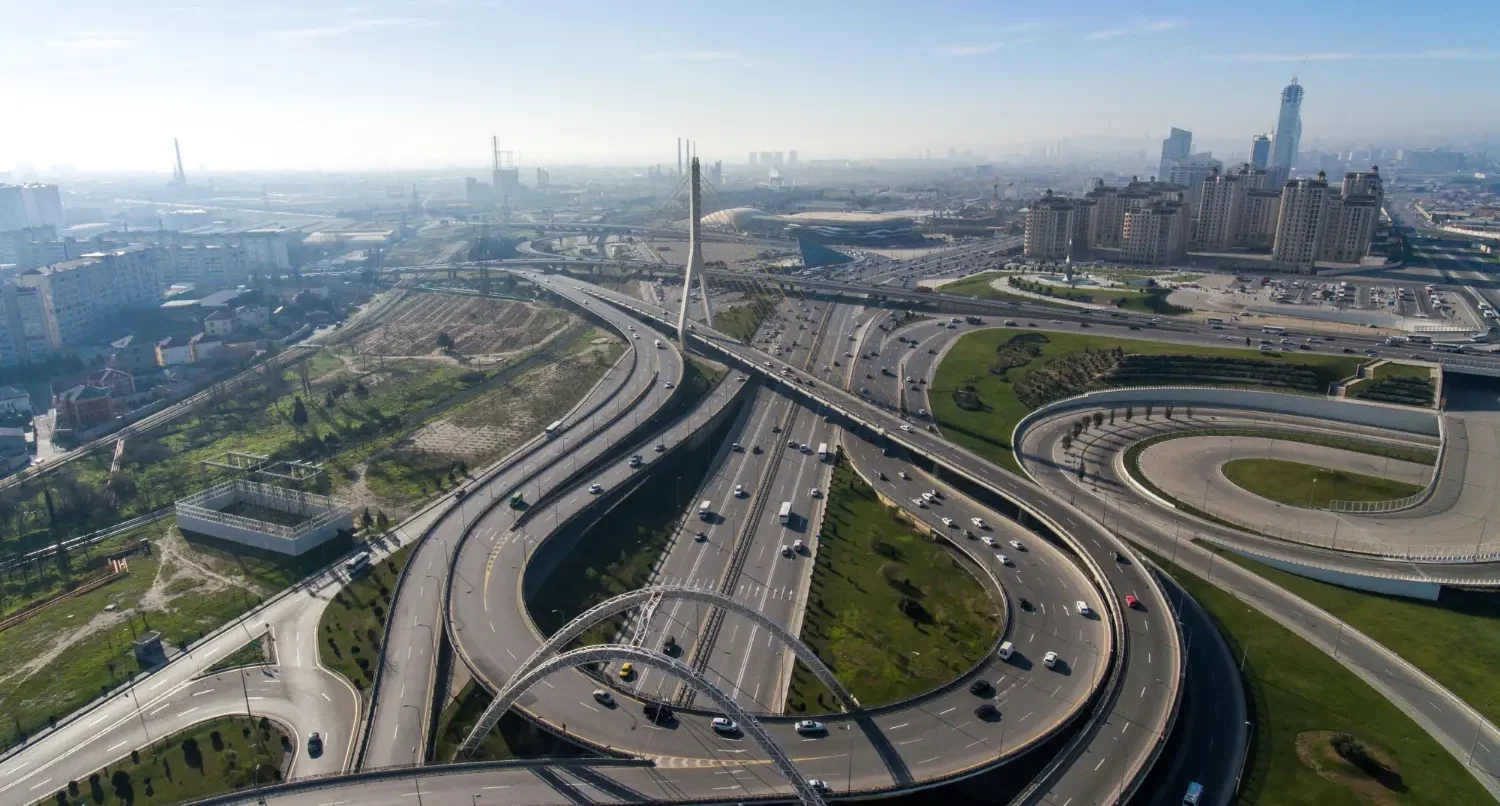
Bridges can be not only means of communication, but also true works of engineering art, combining precise calculations, reliability and bold architectural aesthetics.
Modern bridge construction is the result of collaboration between consulting engineers, architects, designers, and safety specialists. Consulting engineers coordinate between the idea and its implementation, selecting technologies, materials, and design solutions that guarantee the durability and stability of structures even in the most challenging conditions.
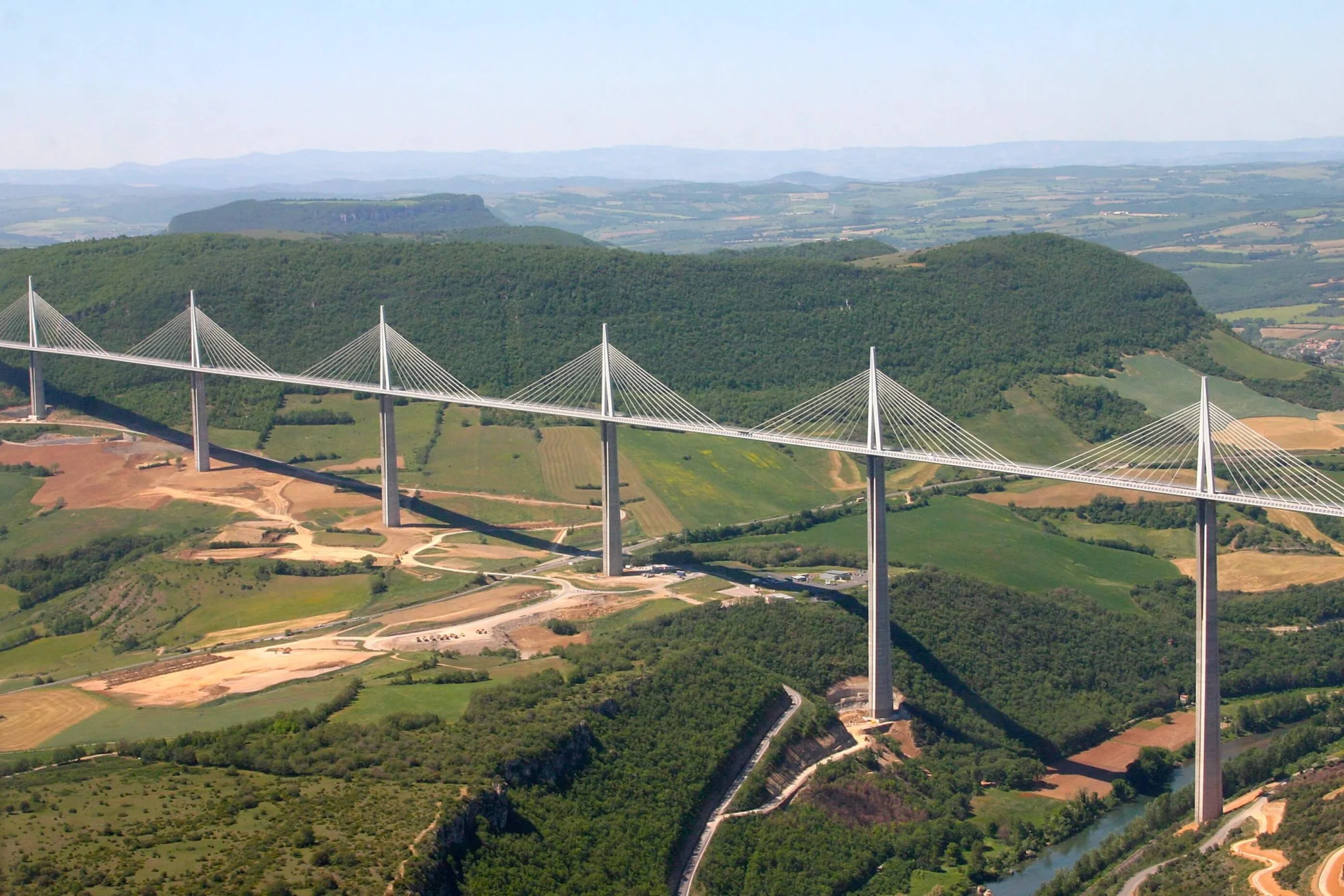
Millau Viaduct (France)
The Millau Viaduct is a unique cable-stayed bridge in southern France, designed by Michel Virlogeux and Norman Foster. It crosses the Tarn River valley and is considered one of the highest bridges in the world: the height of the supports reaches 343 meters, and the length is 2.46 km. The steel and concrete structure combines strength and lightness, blending harmoniously into the landscape.
Thanks to innovative assembly and wind protection technology, the bridge is notable for its stability and aesthetics. The bridge was opened in 2004. It has not only significantly improved transport links between Paris and the Mediterranean, but has also become a famous tourist attraction.
The main technological innovation was the use of prestressed concrete and a sliding section installation system, which made it possible to build the bridge over the gorge without massive supports. To withstand the strong winds characteristic of this area, the bridge was equipped with special protective screens.
• Height: 343 meters
• Length: 2,460 meters
• Spans: 8
• Longest span: 342 meters
• Width: 32 meters
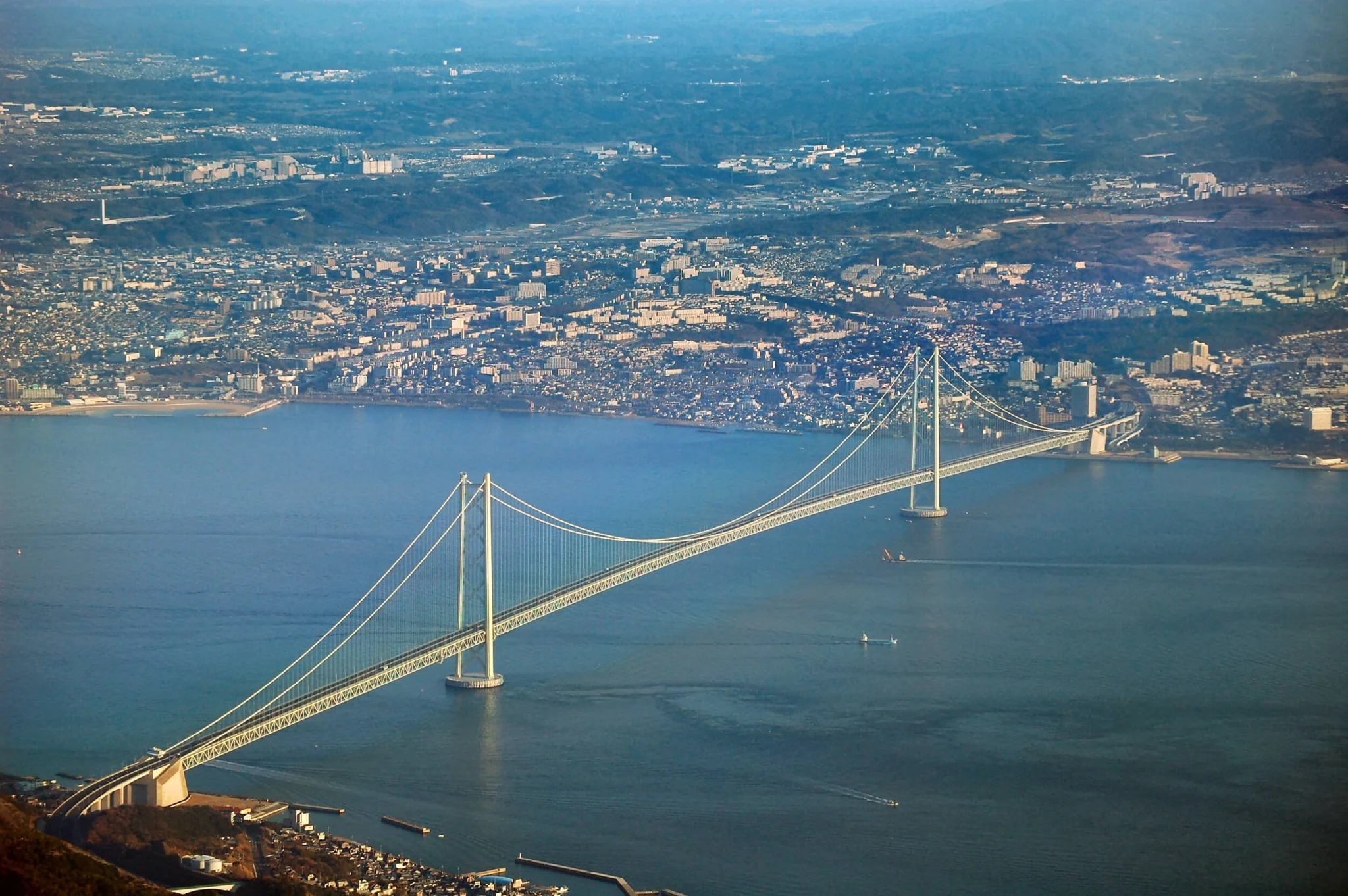
Akashi Kaikyo Bridge (Japan)
A suspension bridge in Japan connecting Kobe on the island of Honshu with Awaji Island. Opened in 1998, it was the longest suspension bridge in the world for a long time.
The bridge can withstand earthquakes up to 8.5 on the Richter scale and winds up to 290 km/h. The bridge has the world’s longest central span — 1,991 meters.
It is also called the “Pearl Bridge” because of its spectacular night illumination. Today, the bridge is a popular tourist destination: there is a walking area, a museum, and the opportunity to climb to the top of the 300-meter tower. Consulting engineers used unique wind vibration damping technologies and earthquake-resistant suspension systems. Its cables consist of more than 300,000 steel wires, and the installation accuracy was measured in millimeters — an example of how engineering borders on art.
• Total length: 3,911 m
• Central span: 1,991 m
• Tower height: 298 m
• Height above water: 65 m
• Number of lanes: 6
• Construction period: 1988–1998
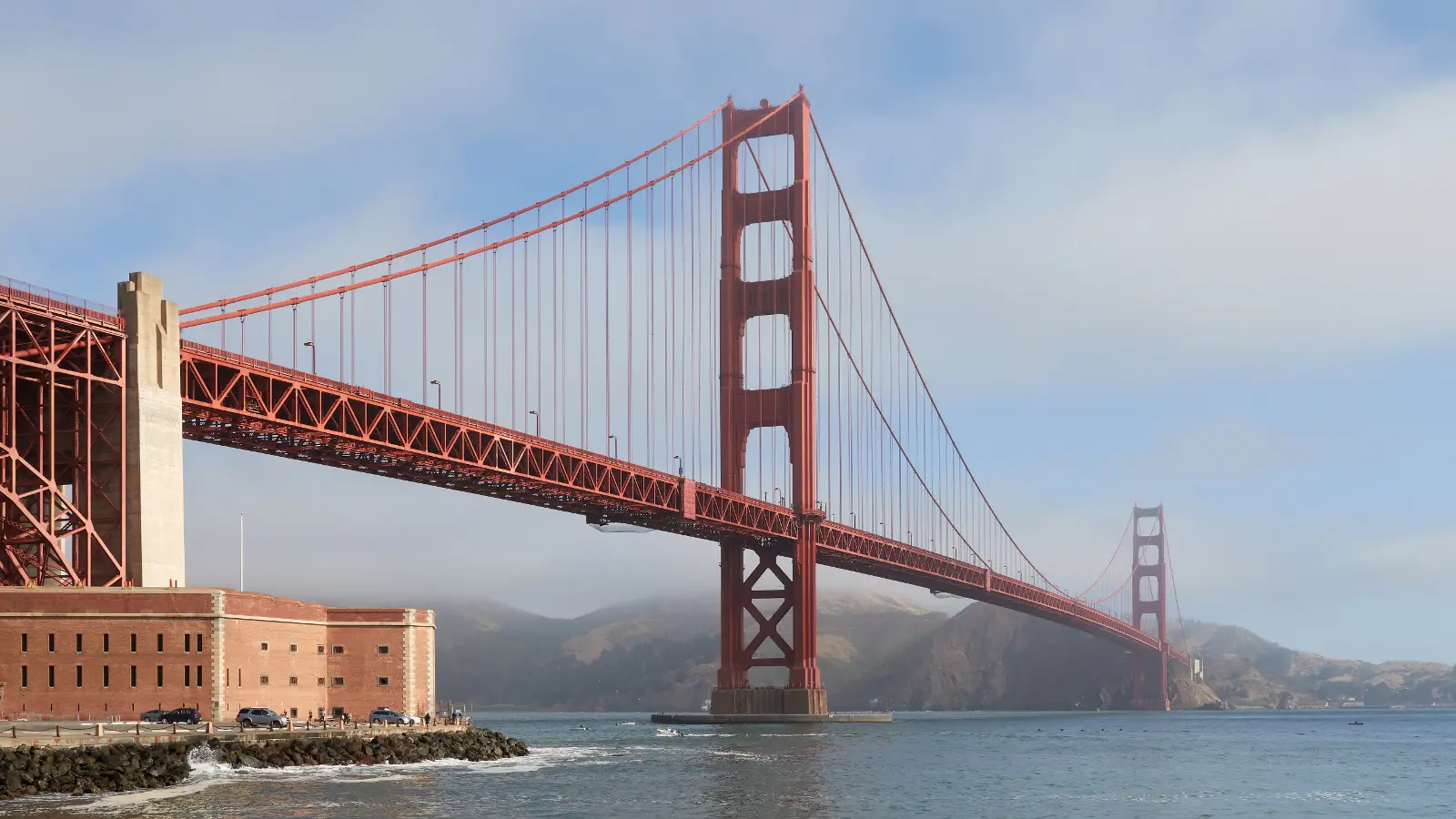
The Golden Gate Bridge (San Francisco, California, USA)
The Golden Gate Bridge connects San Francisco with Marin County across the Golden Gate strait. Opened in 1937, it has become a symbol of San Francisco, one of the most famous bridges in the world, and a new milestone in bridge construction.
During its construction in the 1930s, a highly flexible suspension structure capable of withstanding earthquakes and hurricane-force winds was used for the first time. A team of consulting engineers developed a complex system of steel cables and innovative anti-corrosion protection methods that ensured decades of reliable service for the bridge.
The orange-red color of the structure provides excellent visibility in fog and blends in with the natural landscape. The Golden Gate Bridge is a harmonious combination of engineering excellence and aesthetics.
• Length: 2,737 m
• Central span: 1,280 m
• Tower height: 227 m
• Height above water: 67 m
• Passage width: 27 m (6 lanes)
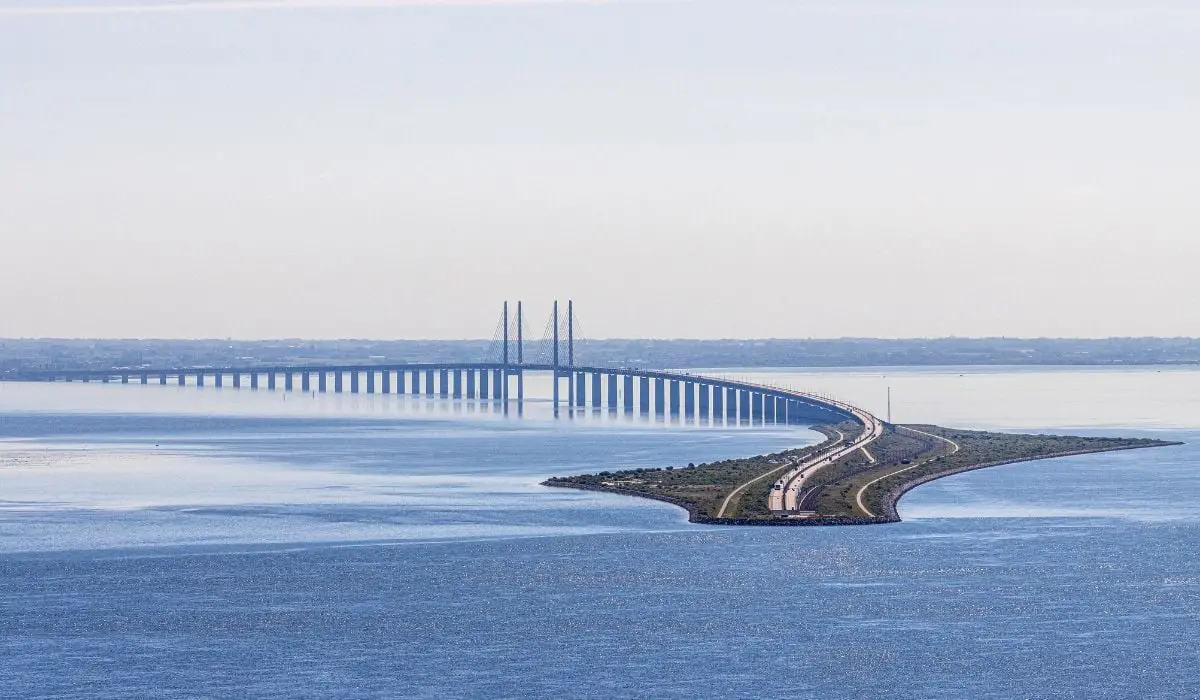
Eresund Bridge (Denmark–Sweden)
The Eresund Bridge is not just a bridge, but a true triumph of modern engineering, connecting Denmark and Sweden across the Eresund Strait. With a total length of 16 km, this unique structure includes 7.845 km of cable-stayed bridge over water, 4.05 km of underwater tunnel, and the 4 km² artificial island of Peberholm as a transition link.
The consulting engineers involved in the construction provided a combination of high-strength concrete (grade C50/60) and steel cables for the cable-stayed system, withstanding winds of up to 200 km/h and the seismic loads of the Baltic Sea.
The bridge’s pylons are 204 m high (higher than the Statue of Liberty) and the main span is 490 m. The structure is supported by 160 steel cables with a total weight of 18,000 tons. The bridge’s capacity is 20,000 cars and 200 trains per day on a double-track railway, with trains traveling at speeds of up to 200 km/h.
The Droogtunnel underwater tunnel, submerged to a depth of 40 m, consists of 20 sections of prefabricated concrete (each weighing 55,000 tons), connected by watertight joints with rubber seals. The artificial island of Peberholm was created from 1.6 million m³ of soil extracted from the seabed and serves not only as a crossing but also as an ecological reserve for 500 species of plants and birds.
This design was necessary in order not to interfere with air traffic and shipping. Consulting engineers implemented a rare combination of concrete embankment, tunnel sections, and cable-stayed structure, which ensures stability even in the harsh climatic conditions of the Baltic Sea.
• Total length: 16 km
• Central span: 490 m (one of the longest in Europe).
• Tower height: 204 m
• Width of passage: 23.5 m
• Construction period: 1995–2000
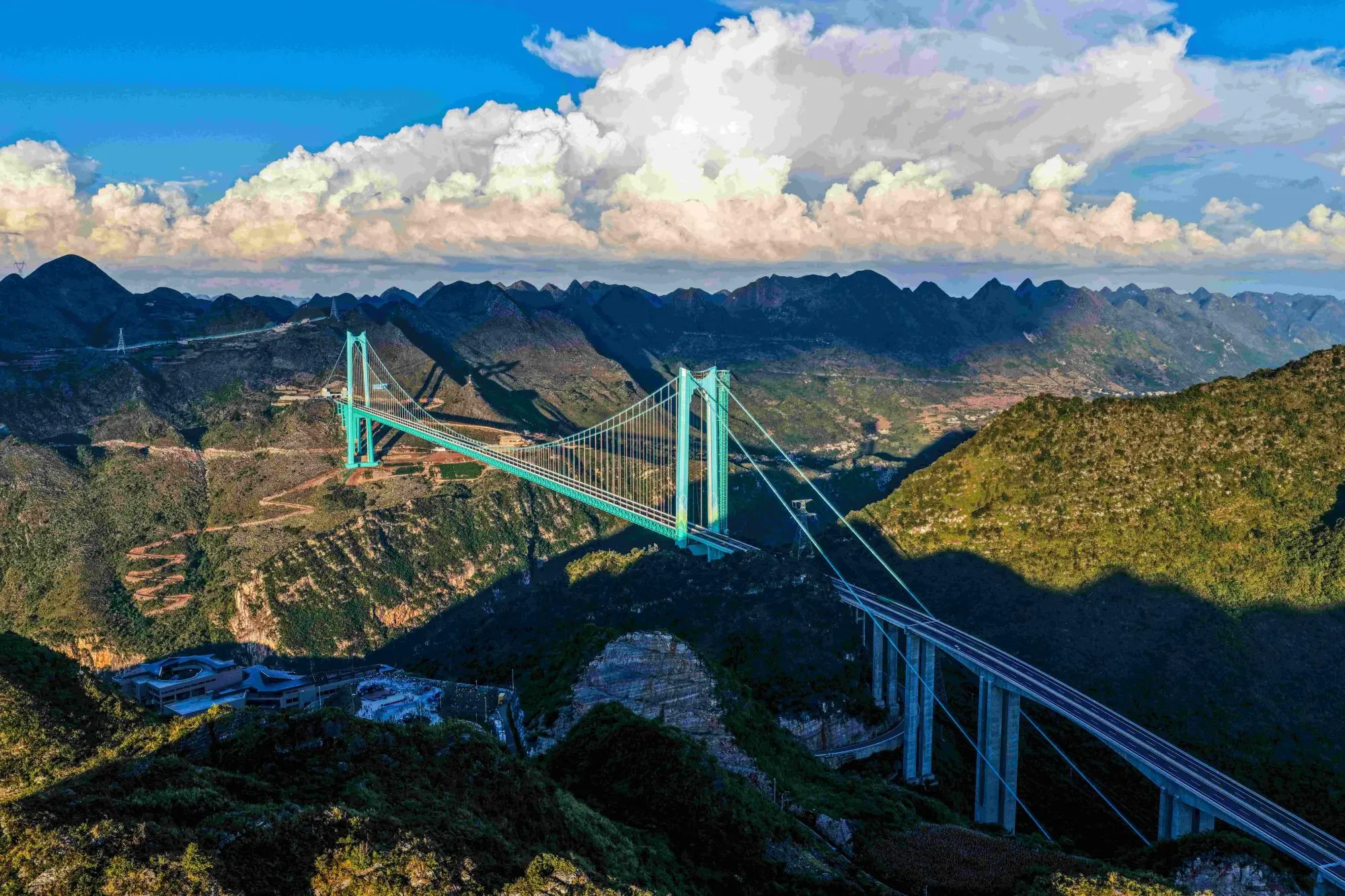
Huangjiang Grand Canyon Bridge (China)
Located in Guizhou Province (China), this bridge is the world’s highest bridge structure, opened in October 2025. This suspension bridge, approximately 3 km long (with a main span of 1.5 km), crosses the deep canyon of the Huajiang River and was built to connect the Luizhi and Anlong areas. The bridge reduces travel time from 2.5 hours to 20 minutes, promoting the economic development of remote regions. Its design takes into account seismic activity and strong winds, making it a symbol of Chinese ambition in infrastructure.
The bridge’s construction technology is an innovative combination of traditional suspension structures and advanced fixing methods. The main element is a deeply embedded anchor system: 200,000 tons of concrete and steel are embedded 120 meters into the rock for stability at extreme heights. Prefabricated deck sections (55,000 tons each) were used in the construction, as well as wind load simulations of up to 200 km/h.
Consulting engineers played a key role in the project, coordinating a large team of various specialists. They developed a unique real-time monitoring system with 300 sensors to record vibrations and deformations, and integrated environmental measures: the bridge minimized its impact on the canyon by restoring 1.2 million m³ of riverbed for biodiversity. The consulting engineers also provided expertise on aerodynamics and seismic resistance, ensuring that the bridge could withstand earthquakes of up to 7 on the Richter scale.
• Total length: 2,890 m
• Central span: 1,420 m
• Tower height: 262 m (single tower)
• Road width: 4 lanes
• Construction period: 2022–2025
As we can see, the success of any bridge project depends not only on architects, but above all on a team of consulting engineers who provide technical supervision, assess risks, develop load models, and are responsible for selecting technological solutions. They determine which materials will withstand decades of use, how the structure will behave during an earthquake or storm, and how to ensure cost-effectiveness without compromising safety.
Today, bridge construction is a combination of engineering, innovative solutions, and a responsible attitude towards the environment. The use of modeling, sensor monitoring systems, and “smart” materials is becoming the industry standard. And each of these bridges is compelling proof that human thought is capable of overcoming not only rivers and distances, but also the limits of what is possible.