
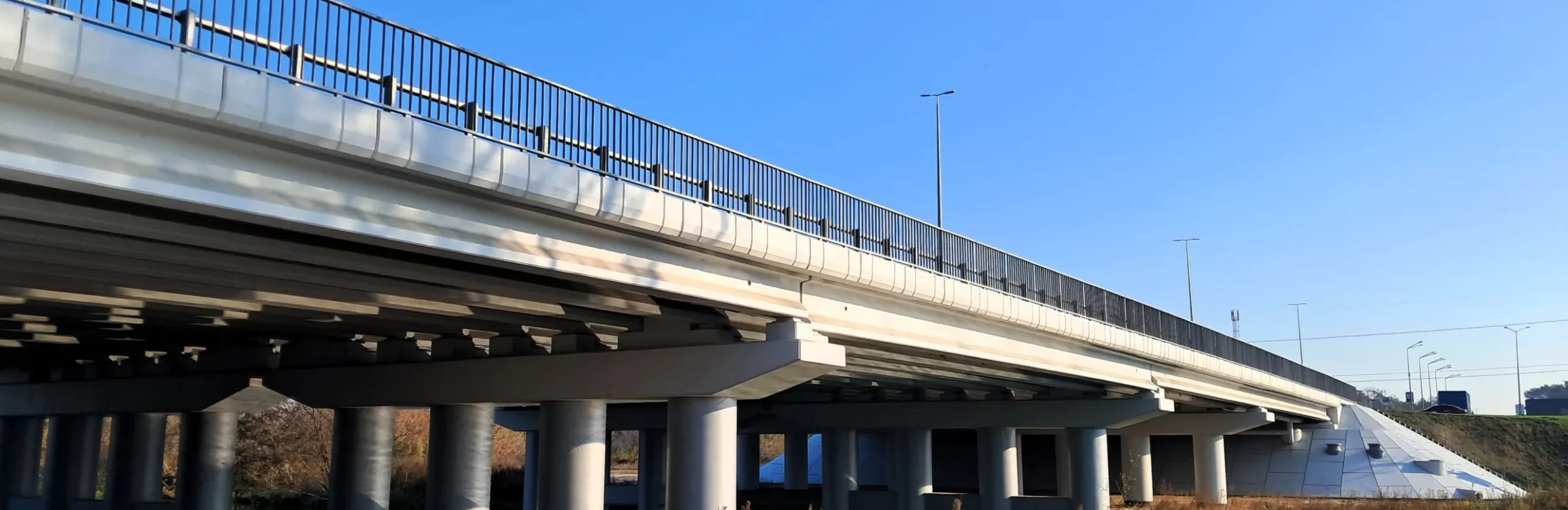
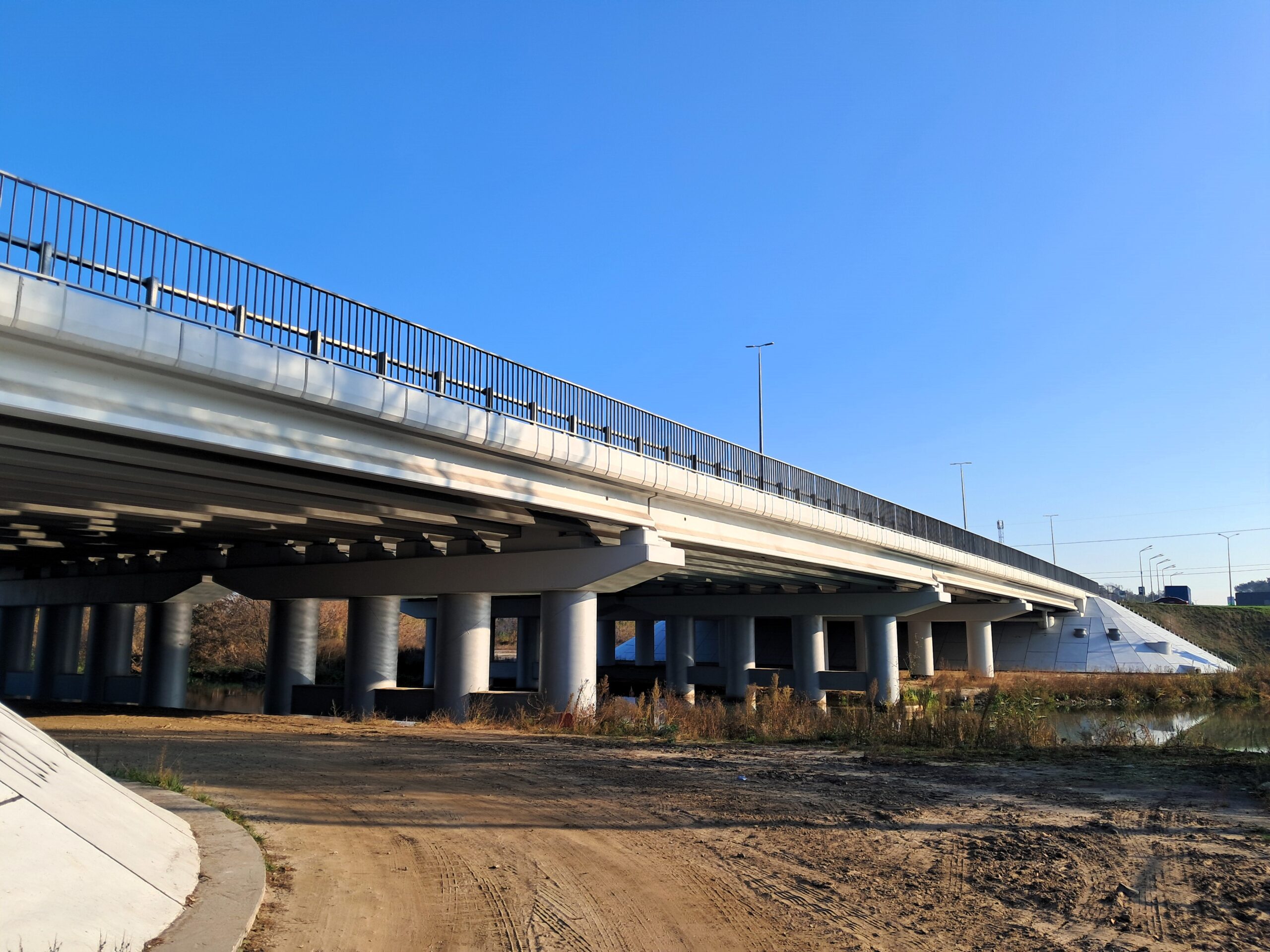
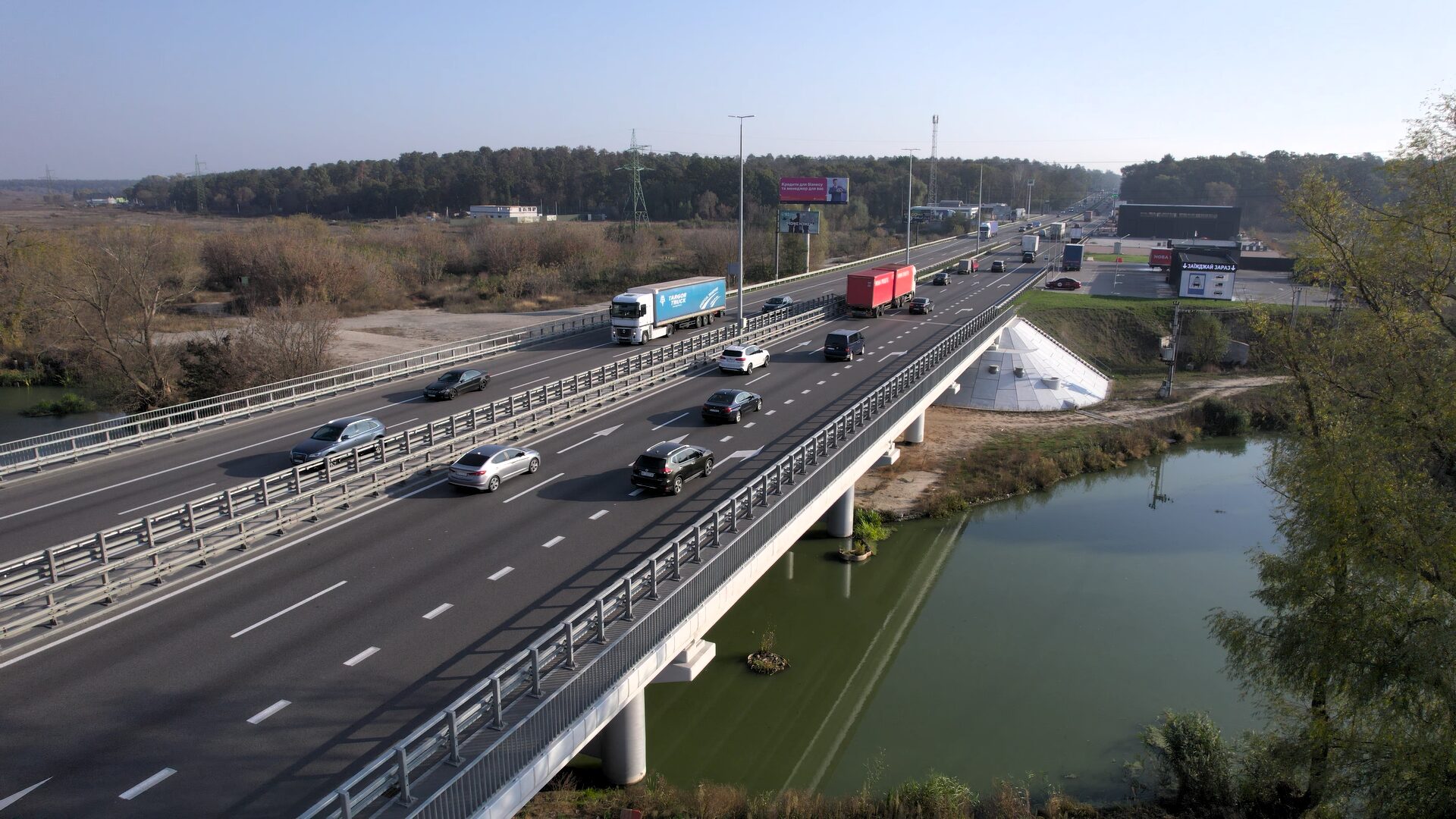
When the team of engineering consulting company Engineering Corp. joined the restoration of the destroyed bridge in Stoyanka in April 2022, the task was to find solutions that would allow for the launch of full-fledged traffic to Kyiv in the shortest possible time. It was not an easy challenge. Under normal circumstances, the implementation of such a project would take at least a year for design and about two years for construction.
However, due to the fact that construction took place simultaneously with the design with the support of engineering consulting specialists, the project was completed in just 21 months.
After quickly considering several options for rebuilding the bridge, the experts chose the best one in terms of time and material availability. The work proceeded, without exaggeration, at a breakneck pace. The contractors worked in two shifts. In less than two months, traffic on the newly constructed temporary bridge on the left lane was restored. In November 2022, full-fledged traffic was launched on the right side, and in September 2023, traffic on the left crossing was opened. Thus, it took less than a year and a half from the start of the project to the full resumption of traffic.
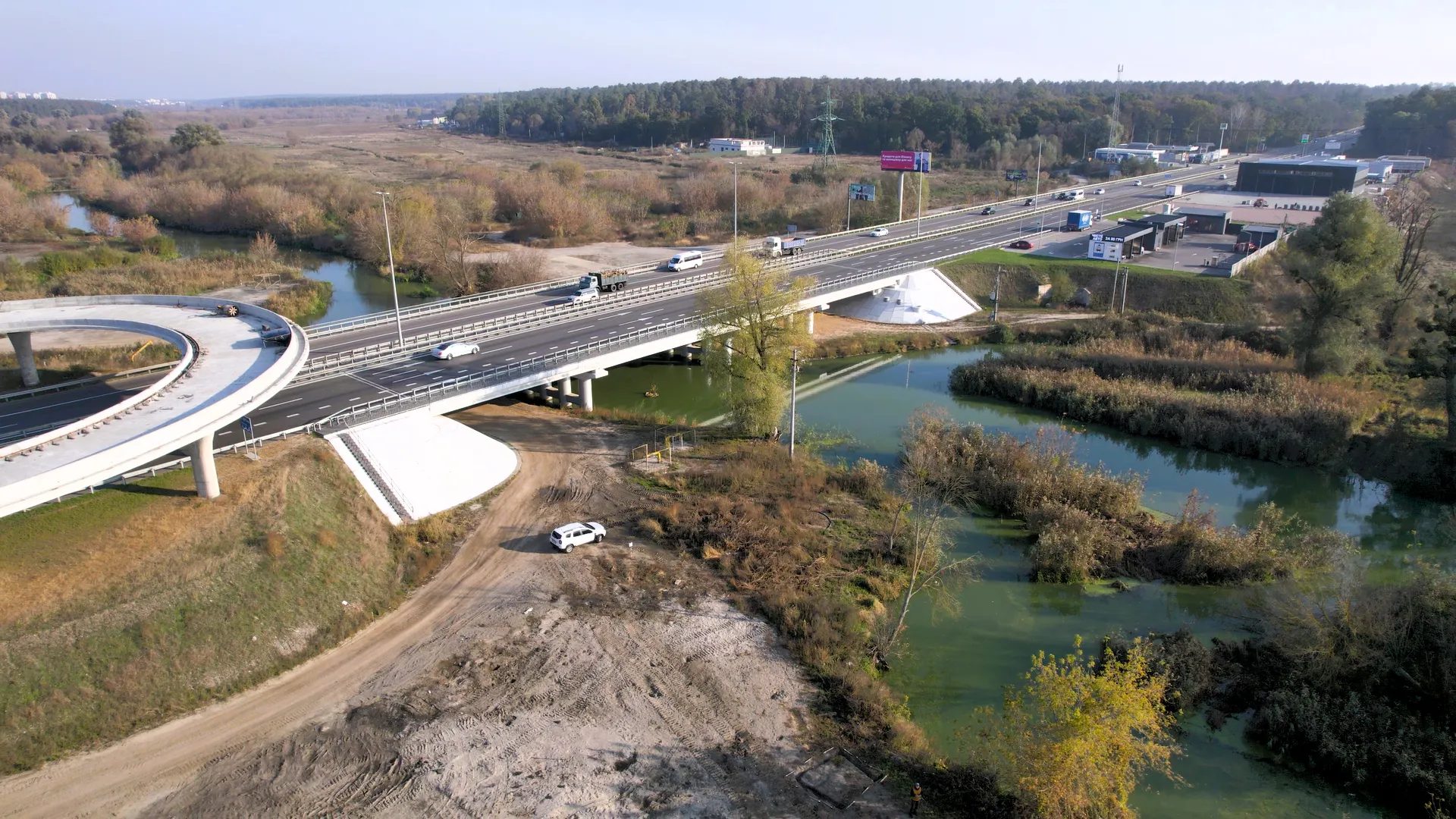
The project was led by Viktor Sobchuk, head of the Kyiv office of Engineering Corp. He recalls that all construction industry professionals gathered around the restoration of the bridge in Stoyanka. The Engineering Corp. team joined the project as a consulting engineer.
“It so happened that most of the objects that our company dealt with in the period from 2022 to 2023 were destroyed bridges. One of these large objects is the “gateway” to Kyiv, the bridge in Stoyanka; another similar object is a bridge in Chernihiv that separated the “road of life” and the entrance to the city. Our task was to quickly restore transport links between the cities, and therefore to speed up the design and construction of the bridges as much as possible,” says the expert.
Not only the full-fledged movement of civilian traffic depended on the speed of restoring the main transportation arteries in the north of the country. It was also necessary to let military equipment that was involved in the further defense of the country through. There was a huge demand from the public for a quick restoration of this facility.
“The first to inspect the destroyed structure was NIRI (State Enterprise National Institute for Infrastructure Development – ed.) And then, after the survey report, designers were involved, who developed a project in a short time. We joined in at the implementation stage. Why do you need a consulting engineer? Usually, there are controversial issues between designers and builders. Some are theorists, others are practitioners, and while they are coordinating everything, it can delay the project quite significantly. And there was no opportunity to resolve any issues for a long time. And our task is to establish mutual understanding between the designer, contractor, and customer.
How do we do it? We have experience, including international projects. Therefore, we have moved away from the classic scheme of project implementation. The philosophy of our company is to set a deadline for solving each problem, so that it can be solved without hours of meetings – it’s a maximum of technical solutions without unnecessary emotions,” says Viktor Sobchuk.
There is a myth that a consulting engineer is a single person who is engaged in purely technical supervision. But in fact, it is a whole team of people who perform a very large functionality and comprehensively support the project, helping to avoid sharp corners and optimize processes during implementation.
“This project involved a certified consulting engineer with relevant experience, technical supervision, which is part of the consulting engineer’s group, estimators who worked on the estimate part of the project at an accelerated pace and with an understanding of the specifics of the work, and our project office. At the pace we were working at and the speed of decision-making, our design specialists were essential. The project was analyzed using various software,” says Viktor Sobchuk.
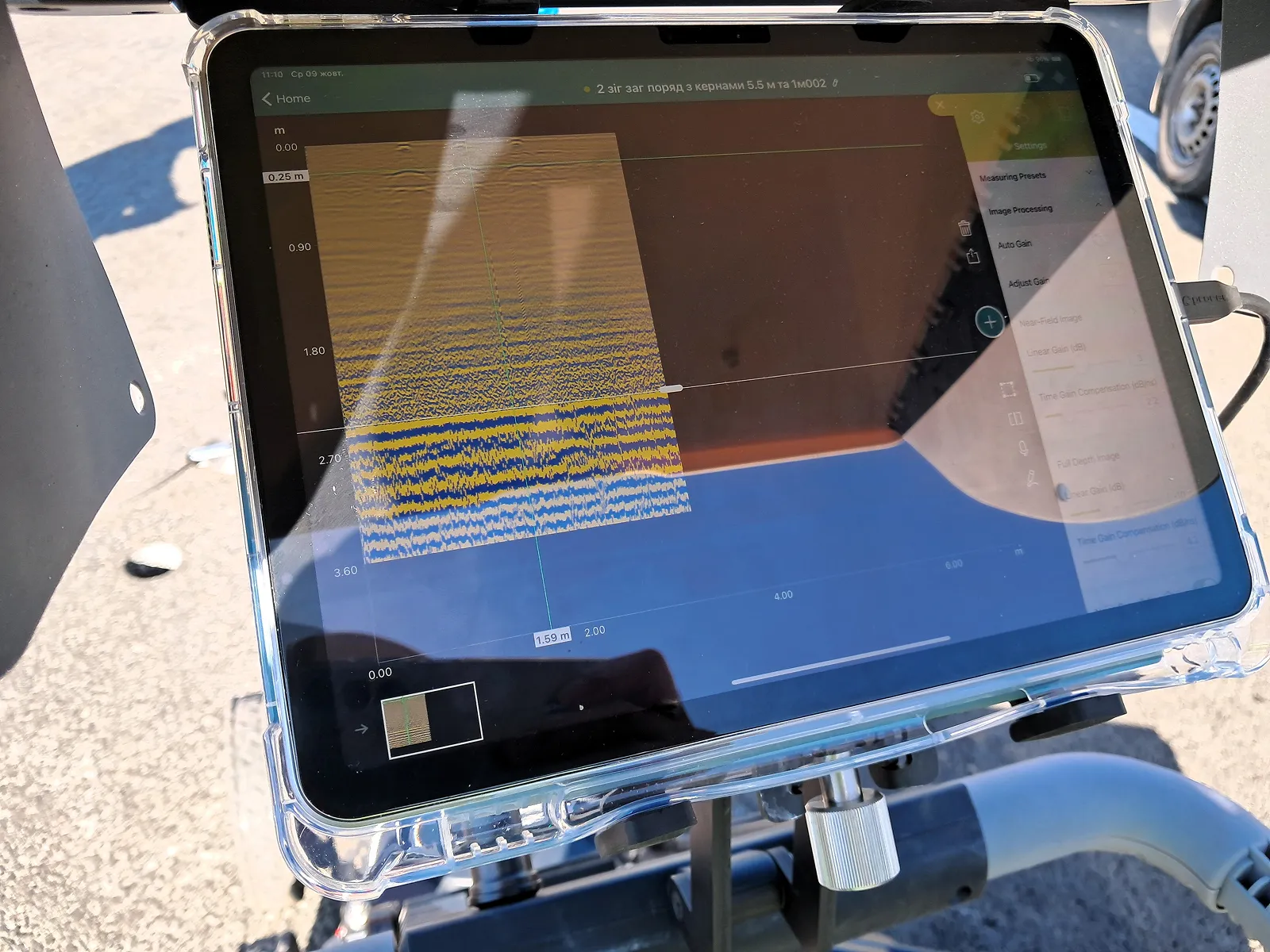
The project manager recalls that when the traffic on the left side of the bridge in Stoyanka was already launched, the builders faced an unforeseen situation. It was the support of the left lane, which was damaged in the explosion, although at first glance everything was fine. The design institute, together with scientific and technical support, inspected it, made conclusions and continued to monitor it.
“We have taken a comprehensive approach to this problem, involved our own laboratory and our own surveyors. We have equipment that can see through a concrete structure by 1.5-2 meters, fully displaying a 3D model with all the necessary data. And we have recorded that this pillar changes its spatial position as the vehicles move. We monitored the pillar for almost a week and made a report. Later, scientific and technical support confirmed our fears that this pillar could collapse at any time. Eventually, it was reinforced. We actually saved the bridge from another disaster.
We always try to find a way out of the situation to minimize losses. Perhaps it would be cheaper to repair the structure? Or, perhaps, it is cheaper to dismantle and build a new one. We always show everything in the calculations, there is no such thing as saying: “Well, let’s do it this way because it will be easier.” We take into account the cost of the work, the service life, and the speed with which something can be done. Speaking about the restoration of infrastructure facilities, it is also about the timeframe for restoration. So, it depends on us to make the right decisions in accordance with the constructive aspects that were laid down in the project,” says Viktor Sobchuk.
This is just the story of one project. The war and the unprecedented amount of destruction across the country have posed huge challenges to the design and construction industries. Previously, it could take one or two years to design a single bridge. Now, specialists have to work non-stop, making quick and non-standard decisions. It is the consulting engineer who helps the customer to optimize processes and make the project take off. However, this profession has appeared in Ukraine relatively recently.
“The profession of consulting engineer appeared in Ukraine about seven years ago and has been actively developing over the past four years. In international practice, this has long been known and understood; in fact, there is no such thing as a “customer” at all. There is the one who gives money, there is the consulting engineer (we call it the “customer service”) and there is the one who performs the work. A person, a state, an organization, a ministry – these are just managers of funds. And control over the entire construction process belongs exclusively to the consulting engineer. We still have such a concept as “customer service”, so in fact, in Ukraine, a consulting engineer duplicates the functions of the customer. But at the same time, they offer an exclusively professional approach,” says Arkadii Varov, chief engineer of Engineering Corp.
The expert notes that the customer’s service does not always have the necessary experience and skills to successfully launch a project. Instead, an engineering and consulting company has the relevant competencies. And at the moment when misunderstandings arise between the parties, the consulting engineer becomes a kind of mediator to resolve disputes.
“If we take this profession abroad, it’s a little different than here. A consulting engineer there also acts as a buffer between all parties, but there is more construction diplomacy. All interaction is spelled out in the contract. Our contracts have not been improved since the days of free Ukraine. This document is drawn up by a lawyer, and it may not take into account certain aspects related to designers, general contractors, and the customer. Having foreign experience, we can propose appropriate changes to the contract,” adds Viktor Sobchuk.
In the context of the country’s post-war reconstruction, it is worth noting that a consulting engineer is an understandable institution for European partners. They understand that if such a specialist is involved in the project implementation, transparency, comprehensive reporting, and compliance with international standards will be ensured.
A consulting engineer can join the project at the stage of idea and search for the best solutions for implementation. Experts can roughly calculate the cost of the object: based on existing analogues in Ukraine, analogues in other countries, or even very distant analogues. It’s no secret that the construction industry in our country is currently facing the implementation of projects that are unique in the world. Having the estimated cost of construction, the customer can announce a tender directly for construction according to the algorithm of simultaneous construction and design and begin implementation. In conditions when certain facilities need to be built “for yesterday,” this approach saves a lot of time by bypassing the traditional stages of pre-project preparation.
“With the support of a consulting engineer who knows all the rules and regulations, the project can begin. The designer does minimal design – those drawings that are needed to start work, the builder is already starting his work. Then comes the design, the consulting engineer controls it all, and the facility is built. During the project implementation, every certain period of time, we make our reports, where we show an independent assessment of the implementation schedules, keep all the documentation that the customer will need to put the facility into operation.
The consulting engineer sees what the customer, who is used to standard work processes, usually does not. We suggest which process can be started earlier, which can be paralleled, or which can be eliminated altogether. Optimization, control, mediation with all participants in the implementation process, acceleration of processes in the interests of the project – these are our main tasks,” Arkady Varov summarizes.